What size hole do I need?Updated 3 months ago
Choosing the right hole size makes all the difference when it comes to slow feeding, so we get this question a lot! The good news is there's no need to overthink it. It really comes down to what you're trying to achieve, how experienced your animals are with slow feeders, and what type of hay you're working with. Below we've broken down each hole size and what it's best suited for, so you can find the perfect fit for your paddock.
If saving on wastage is your primary concern, then 40mm or 60mm is ideal.
If you are wanting to regulate your animals consumption, reduce boredom and save on wastage then 40mm is the most popular and ideal option.
If you are specifically wanting to slow your animal down, reduce boredom and they have some experience with slow feeders, then the 30mm or 20mm would be your best option.
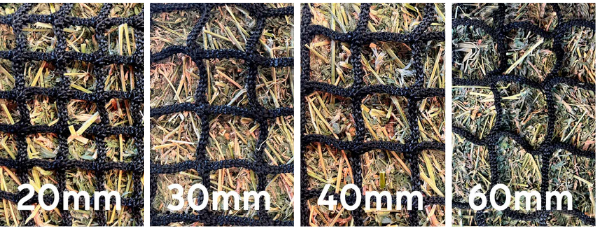
- 20mm Holes: Only available in Knotless, our 20mm mesh is suited for experienced slow-feed horses that still manage to move quickly through our 30mm hay bags. We would only recommend looking at 20mm holes for advanced horses and ponies that have used the 30mm bags previously.
- 30mm Holes: The 30mm is perfect for ponies and experienced animals who have previously used slow feeding nets. Without experience, the small 30mm holes may cause some frustration for your horses. We would recommend this size for horses who understand how to use a slow feed net, but just require a slightly reduced consumption rate. The 30mm size is also great for reducing boredom, as the reduced consumption rate will keep your horse stimulated for a longer period of time.
- 40mm Holes: Our 40mm hole size are our most common (and popular) size and are accepted by 98% of horses. The 40mm is a great all-rounder that will slow the horses down whilst also saving on wastage. It is therefore the ideal hole size to choose if you are unsure OR just introducing Slow Feed Hay Nets to your horses for the first time. The 40mm hole will slow your horse down, but not so much as to cause frustration. You will reap the benefits of reduced wastage, whilst at the same time providing significant benefits to your horses health.
- 60mm Holes: Our 60mm hole size nets are primarily designed as a Hay Saver as opposed to being a slow feeder product. It is a popular option for hay that is stalky or not very palatable. Our 60mm hole size nets are great for broodmares, young stock & old horses that don't require slowing down. This size will slow the consumption rate marginally, however more-so it will keep your hay together and minimise wastage.
Other considerations to keep in mind when selecting a hay net size include:
The Weather: You may wish to alternate your mesh sizes throughout the year. You may opt to use a 60mm net (to save on wastage but not slow them down too much) in Winter, but in Springtime a more slow feeding option such as 40mm OR 30mm may be a more suitable option.
The Type of Hay: If your hay is stalky, it would be best to opt for a 40mm or 60mm net hole. On the other hand of your hay is very fine, a 30mm net may suit your horses best.
Weight and health of your Horse: This is a very important consideration as a slow feeder can assist with weight control as well as several other conditions.
Livestock and Other Animals: Our Hay Net range is commonly used by owners of animals “other than horses”. They are commonly used for:
- Cattle
- Sheep
- Alpaca’s
- Goats
Please be mindful of horns (entanglement) and ear tags that can be rubbed out.
The most common size for these animals is our 40mm net. This size provides some slow feeding whilst also minimising the hay wastage. Depending on what you’re trying to achieve (just like with horses), both the 30mm and 60mm varieties have also successfully in the past. A 40mm sized net is always the best place to start. You can then go up or down a size if needed.
Every animal and setup is different, so if you'd like a hand working it out, get in touch. We're always happy to talk through your hole size options, your feeding setup, and any concerns you might have to help you find the best fit.